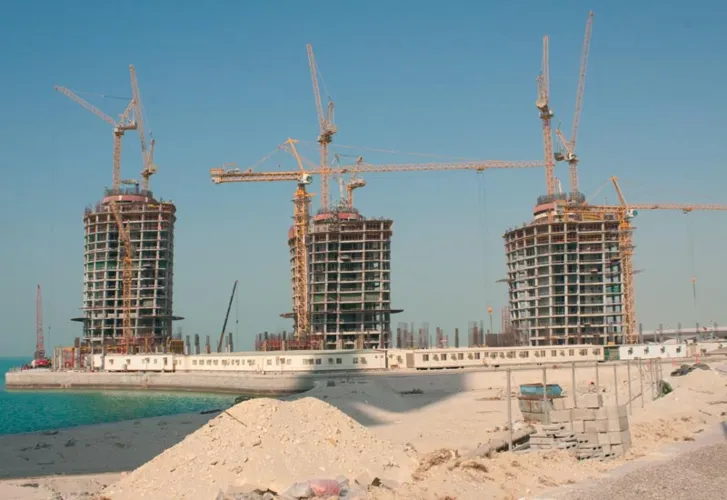

Bahrain is preparing a major expansion of the industrial and logistics area beside Khalifa Bin Salman Port. According to Bahrain’s Tender Board, the current consultancy package covers engineering and quantity-surveying services for the reclamation of approximately 1.129 million square metres along Avenue 13. The development is linked to the expansion of Salman Industrial City and Bahrain Logistics Zone and will require around 9.665 million cubic metres of fill together with rock protection works.
The consultancy contract is planned over 44 months, showing that the project will develop through several stages rather than as a short construction package. Five bids were submitted for the engineering and quantity-surveying assignment, indicating active interest in the early delivery phase.
The location gives the project wider significance. Bahrain EDB identifies the Hidd area as a concentrated industrial and logistics cluster that includes Khalifa Bin Salman Port, Bahrain Logistics Zone and Bahrain International Investment Park. Additional land in the same corridor can therefore extend an existing ecosystem rather than create an isolated logistics district.
New Land Can Support More Than Warehousing
Reclamation is only the first stage of activity. Creating a usable development platform requires marine works, surveying, earthworks, rock protection, engineering supervision and project controls. Later phases can create demand for roads, drainage, electricity, water, telecommunications, warehouses and industrial buildings.
The commercial opportunity therefore develops over time. Marine and civil contractors may participate early, followed by utility specialists and infrastructure suppliers as the site is serviced. Industrial developers, warehouse operators and manufacturers become more relevant as plots and facilities are made available.
For logistics businesses, additional land close to the port can support distribution centres, cross-docking, storage, cold chain, e-commerce fulfilment and value-added services. Manufacturers may also benefit from proximity to import infrastructure, suppliers and regional transport routes. The value of the expansion is therefore not only additional space but the ability to locate complementary activities within the same operating corridor.
Hidd’s Location Strengthens the Commercial Case
Hidd combines port access with practical links to Bahrain International Airport, the national road network and the King Fahd Causeway. That geography can support businesses serving Bahrain while also considering Saudi Arabia and other nearby Gulf markets.
Different occupiers will value the location for different reasons. Food companies may need temperature-controlled storage and dependable distribution. Industrial suppliers may prioritise yard space, heavy handling and proximity to manufacturing customers. E-commerce operators may focus on fulfilment speed and inventory visibility, while manufacturers may look for efficient access to imported components and export routes.
This also means new land does not create equal value for every user. Utility capacity, road access, plot configuration and future zoning will influence which activities are most suitable. Companies considering the area will need to understand how later infrastructure packages and land allocations develop before making investment decisions.
Where the Business Opportunity Is Developing
For businesses, the strongest signal is that Bahrain is adding physical capacity to an area already used for trade, manufacturing and distribution. Opportunities can emerge both during the construction cycle and once the reclaimed land begins moving into commercial use.
Warehouse designers, automation providers, racking suppliers, cold-chain specialists, fleet operators, material-handling companies and digital logistics platforms could all find roles as facilities are developed. Engineering firms and infrastructure suppliers are likely to see opportunities earlier, while operators and occupiers will become more relevant as serviced plots are released.
Timing will matter. Companies that follow the project from the reclamation stage can better understand when utility works, building packages and occupancy decisions are likely to appear. That can help suppliers prepare local partnerships, product approvals or commercial relationships before procurement becomes crowded.
For businesses already operating in Bahrain, the expansion may eventually provide room to consolidate fragmented facilities or add capacity closer to the port. For regional investors, it strengthens Hidd’s position as a practical base for companies whose operating model depends on port access, warehousing and efficient links to nearby GCC markets. The opportunity will develop gradually, but the direction is clear: additional logistics and industrial capacity is being planned where Bahrain already has an established concentration of infrastructure and commercial activity.